What is soy protein fiber?
Soy protein fiber comes from the plant protein in soybean meal. Mr. Li Guanqi gave new material value to the soybean meal left after oil extraction. Through protein extraction, modification, and fiber forming, it becomes a plant-protein fiber that can be used in home textiles, nonwovens, filling, and next-to-skin materials.
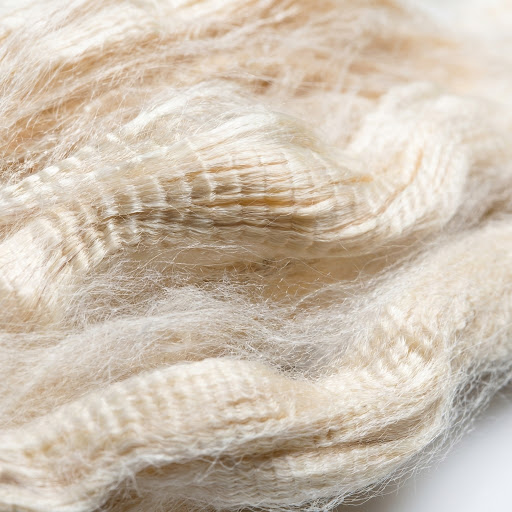
Fiber appearance
Production Process

Material Performance
Softness that comes from the fiber itself.
Its softness, skin-friendliness, and fresh feel are not a hand-feel added by finishing — they come from the characteristics of the material itself.
Grooved surface
Soy protein fiber has grooves and an irregular structure on its surface, helping moisture move and spread across the fiber.
Cotton-like moisture absorption
Good moisture absorption and regain, so it doesn't easily feel dry or stuffy and sticky in use. Fresh, natural, and less clammy.
High moisture regain
Softness from plant protein
Contains a variety of amino acids — soft, fine, and skin-friendly. Soy protein takes part in fiber forming, bringing the touch back to the material itself.
Natural amino-acid skin affinity
Antibacterial performance test
Antibacterial performance grade AAAAA. Staphylococcus aureus inhibition 92%, Escherichia coli 86%, Candida albicans 82%.
Test grade: AAAAA
Negative-ion function
Generates beneficial negative ions for a fresher experience. Negative-ion generation: 594 ions/cm³.
Activity release test
Far-infrared function
Provides more support for a comfortable experience. Far-infrared emissivity: 0.76; far-infrared radiation temperature rise: 2.3°C.
Temp rise: 2.3°C